
Legacy is not an age. It is a support gap.
A system is legacy when the cost and risk of keeping it running outrun the value it delivers. That can happen in year twelve. It can also happen in year one, the day the vendor stops taking new customers. This is a review that sorts your estate by that test and names the first move.
- €2,000 per workshop
- €1,000 per written result
- Remote or on-site
- English or German
Nobody official defines legacy by age.
The UK Government's current definition is the clearest one published: legacy IT are “systems whose continued use creates a persistent, unacceptable burden or risk and can no longer be supported or secured effectively or economically”[1]. The same document says the definition is “deliberately centred on burden or risk, rather than age, technology type, hosting model or whether a technology is unfashionable”.
Gartner says the same thing from the other side: a legacy system “may be based on outdated technologies, but is critical to day-to-day operations”[5]. That criticality is exactly what makes it hard to replace, and exactly why it keeps getting deferred.
The US GAO does not take the statutory wording (“outdated or obsolete”) at face value either. It scores systems on supportability of hardware and software, whether the language is still taught, how critical the system is, and known security exposure[3][4]. Age is one input among many.
So the useful question in a modernization review is never “how old is this?” It is “what happens when it breaks, and who is left who can fix it?”
Seven triggers. Any one is enough.
The UK Government framework treats a system as legacy if it breaches the unacceptable threshold on any single criterion[1]. Four of the seven are about people and contracts, not about code. That is the part most modernization business cases miss.
| Trigger | What it means in practice | Where it usually bites |
|---|---|---|
| Out of support | Past the vendor's or the project's support date, including open source | Security patches stop arriving; the NCSC notes obsolete products stop receiving both updates and the newest mitigations[6] |
| Missing or inadequate contracts | Expired licences, no continuity arrangement, no one on the hook | Discovered during an incident, not before one |
| Lack of skills and knowledge | The people who understood it have left | Change requests take months and nobody will estimate them |
| Cannot meet user or business needs | The system blocks the thing the business now has to do | Workarounds in spreadsheets and inboxes |
| Unsuitable hardware | The platform underneath is the constraint | Capacity, warranty and data-centre exit dates |
| Fails minimum security standards | Persistent weaknesses that a hostile actor can exploit | Audit findings that get re-raised every year |
| Depends on something legacy | It rests on a component that is itself legacy | The dependency nobody listed in the inventory |
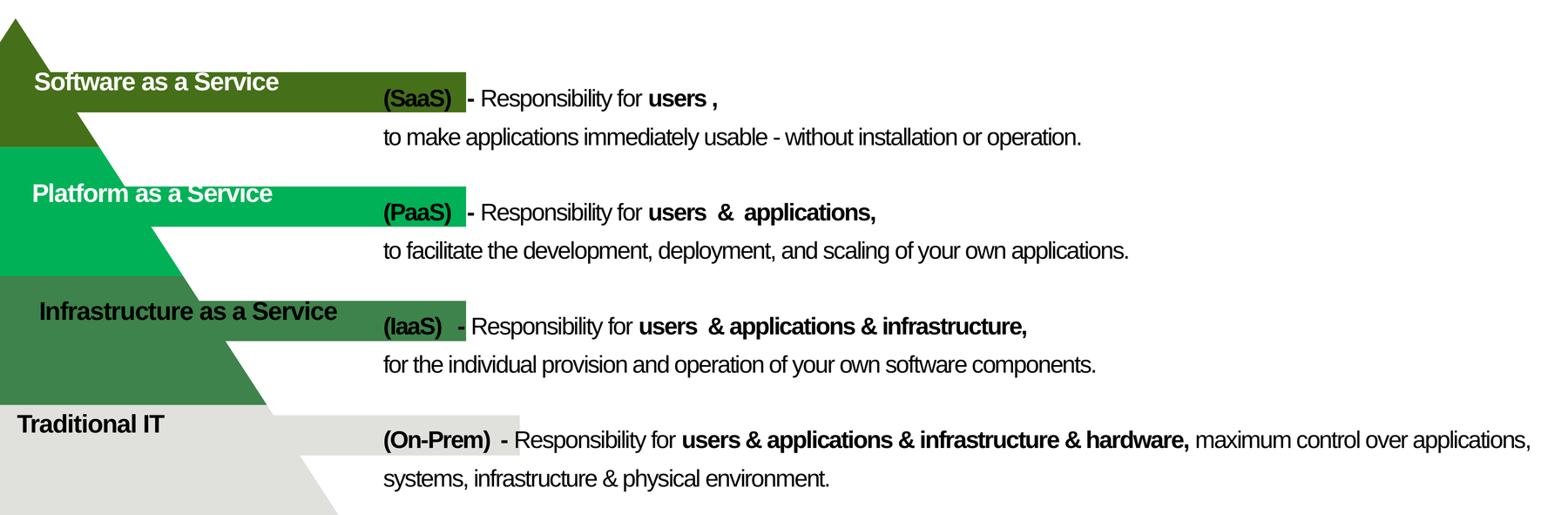
A managed service can become legacy while it is still running.
This is the example I use in reviews, because it is recent, documented and nobody can argue with it.
AWS App Runner
AWS states plainly: “AWS App Runner is no longer open to new customers”, and “we do not plan to introduce new features”[8]. The product page puts the cut-off at 30 April 2026[9]. Existing services keep running and keep getting security and availability work.
Frozen, not broken
Nothing failed. But a service that takes no new customers and gets no new features has stopped moving, while everything it integrates with keeps moving. On the criteria above that is the out-of-support trigger arriving in slow motion.
For containers
“We recommend that customers explore Amazon Elastic Container Service (Amazon ECS) Express Mode when migrating from AWS App Runner”[8]. It keeps the one-call simplicity and gives you the rest of the ECS feature set[10].
For agents
If what you were running on App Runner is an AI agent, the container question is the wrong question. Amazon Bedrock AgentCore went generally available in October 2025[12], and AgentCore Runtime is built for agent workloads rather than adapted to them.
You cannot debug an agent with request logs.
A web service fails in ways a load balancer can see. An agent fails in ways it cannot: it picks the wrong tool, loops, silently truncates context, or produces a confident answer from a stale retrieval. None of that shows up as a 5xx.
AgentCore emits telemetry in standard OpenTelemetry format and stores it in Amazon CloudWatch: spans for each step of the agent workflow, session counts, latency, duration, token usage and error rates, with trace visualisations you can walk step by step[11]. You can inspect the execution path, audit intermediate outputs and find where the cost actually went.
That is the real argument for moving an agent off a general-purpose container runtime, and it has nothing to do with App Runner's lifecycle. The lifecycle just removed the excuse for deferring the decision.
The same reasoning applies to everything else in the estate. The trigger is rarely the thing that makes the case. The thing that makes the case is what you get on the other side.
Seven moves, and two of them are not migrations.
AWS's own framing[7]. I use it as a decision grid rather than a modernization mandate, because retire and retain are real answers and they are usually the cheapest ones on the table.
| Move | What it is | When it is the right answer |
|---|---|---|
| Retire | Decommission or archive it | Nobody has used it in a year and the data has a home |
| Retain | Leave it where it is, for now | The constraint is real and the clock is not running yet |
| Rehost | Lift and shift, no changes | The data centre exit date is the driver, not the architecture |
| Relocate | Move the platform, keep the workloads | A whole VMware or container estate at once |
| Repurchase | Replace it with a product | The thing is not a differentiator and a product exists |
| Replatform | Lift, tinker and shift | A managed database or runtime removes most of the operating burden |
| Refactor | Re-architect for cloud-native | The business case depends on capability you cannot get otherwise |
What you walk away with.
The workshop itself is €2,000. Written results are €1,000 each. The standard package is the review and the first two results.
Legacy assessment of the estateIncluded
Every system in scope scored against the seven triggers, with the evidence for each score written down, so the ranking survives the next steering meeting.
Move recommendation per systemIncluded
One of the seven Rs per system, with the reason, the rough effort band and what has to be true before it starts.
Reference architecture for the first moveOptional
The target design for the one system you do first, named down to the AWS service, with the data boundary drawn.
Funding caseOptional
Whether AWS migration or proof-of-concept funding applies, and what an application needs[15].
Pay for the review, add the results you need.
Tick the results you want. Net prices, plus VAT.
Legacy Modernization Review
Pre-session intake, one workshop with your platform, application and security people, written results within 5 business days.
€2,000 each, 3 to 4 hours, remote or on-site
Delivered within 5 business days after the last session.
Legacy review
The AWS services behind this work.
The services that most often replace something in a modernization review, with a plain note on what each does.
AWS App Runner
Runs a container web app from an image with scaling and HTTPS handled by AWS.
Amazon Bedrock AgentCore
Runtime, memory, identity and tool gateway for AI agents built with any framework, such as Strands or CrewAI.
AWS Lambda
Runs small pieces of code on demand without servers to manage. You pay per request and duration.
Amazon CloudWatch
Logs, metrics and alarms. For AI systems: latency, errors and cost per call.
Amazon Bedrock
Managed access to foundation models from several providers through one API. You choose the model and write the prompt; AWS runs the model.
AWS Well-Architected Framework
AWS guidance for reviewing workloads on security, reliability, cost, performance, operations and sustainability.
Real patterns, documented in the open.
Modernization write-ups on ai-solutions.wiki, the open engineering reference I maintain: architecture, services and trade-offs for each.
Intelligent Document Processing with AI
A practical architecture for extracting structured data from invoices, contracts, and forms: combining OCR, classification, and LLM-based extraction.
Read on ai-solutions.wiki →InsuranceAI Claims Assistant - From Intake to Payout Recommendation
An AI assistant that guides claims from first notice of loss through evidence gathering, missing information detection, fraud screening, and payout recommendation: with human adjuster sign-off at every decision gate.
Read on ai-solutions.wiki →Public sectorAI Permit Processing for Government Agencies
Automated permit application review, compliance checking, and workflow management to reduce processing times and improve consistency.
Read on ai-solutions.wiki →ManufacturingAI Predictive Maintenance for Manufacturing
Sensor-driven predictive maintenance using machine learning to forecast equipment failures, optimize maintenance schedules, and reduce unplanned downtime.
Read on ai-solutions.wiki →Check AWS funding before you pay.
Many AI proofs of concept and cloud migrations qualify for AWS funding: credits for the AWS usage and, in some partner programmes, funds for the delivery work. What applies depends on the project, the programme and the AWS account team. I check it in the Idea Call, and the workshop results are written so they can go straight into an application.
Proof of concept
For a prototype on AWS with a clear path to production.
Migration
For larger cloud moves, planned in phases.
What people ask before booking.
Is a system legacy just because it is old?
No, and none of the official definitions say so. The UK Government framework is explicit that it is “deliberately centred on burden or risk, rather than age”[1]. A supported, staffed, secure thirty-year-old system is not legacy. An unmaintained three-year-old service is.
Is AWS App Runner deprecated?
AWS's wording is that it “is no longer open to new customers” and that AWS does “not plan to introduce new features”, while continuing to invest in security and availability[8]. Existing services keep running. AWS recommends Amazon ECS Express Mode for container workloads.
Should I move my agents to AgentCore?
If you are running agents on a general-purpose container runtime and cannot see which step failed or where the tokens went, that is the argument. AgentCore emits OpenTelemetry spans and traces into CloudWatch for each step of the workflow[11]. Whether it is worth the move is exactly what the review answers.
What does the review cost?
€2,000 for the workshop plus €1,000 per written result. The standard package with the assessment and the move recommendation is €4,000 net.
How many systems can you cover in one workshop?
Realistically 10 to 25, if someone in the room knows each of them. For a larger estate we score a representative sample first and then apply the same scoring to the rest.
Do you only work on AWS?
The scoring is vendor-neutral: it is about support, skills, contracts and risk. The target architectures I build are on AWS and on hybrid platforms such as Red Hat OpenShift AI.

Linda Mohamed
I design and build AI and cloud systems on AWS and hybrid platforms, and I teach how they work. I have organised the AWS User Group Vienna for more than seven years, co-organise AWS Community Day DACH, teach AI architectures at Hochschule Burgenland, speak at conferences in Europe and the US, and maintain ai-solutions.wiki. Based in Vienna. Remote or on-site, in English or German.
Where the facts come from.
Prices, service names and limits change. The linked official pages are the reference; figures on this page were checked in September 2026.
- UK Government (GDS/CDDO): Updated Definition of Legacy IT
- UK Government: Guidance on the Legacy IT Risk Assessment Framework
- US GAO-19-471: Agencies Need to Develop Modernization Plans for Critical Legacy Systems
- US GAO-25-107795: Agencies Need to Plan for Modernizing Critical Decades-Old Legacy Systems
- Gartner IT Glossary: Legacy Application or System
- NCSC: Device security guidance, obsolete products
- AWS Prescriptive Guidance: about the migration strategies (the 7 Rs)
- AWS: App Runner availability change
- AWS App Runner product page
- Amazon ECS Express Mode
- Amazon Bedrock AgentCore: observability
- Amazon Bedrock AgentCore is now generally available
- Microsoft Fixed Lifecycle Policy
- Oracle Lifetime Support Policy
- AWS Well-Architected Framework
- ai-solutions.wiki: from AI proof of concept to production
Start with one conversation.
30 minutes to look at your idea, your data and the right starting point. Or book 15 minutes if you only have a question.
- Which of your systems are actually legacy
- Which trigger each one breaches
- Which of the seven moves fits
- Whether funding could cover the first one
Vienna, Austria · remote across Europe · [email protected]