
Agent systems that hold up once real data arrives
Agent architecture on Amazon Bedrock and AgentCore, built with Strands Agents, CrewAI or LangGraph. Designed for the day the system carries real work: narrow permissions, evaluation, cost limits and a human where it matters.
- From €5,000
- Build or review
- Amazon Bedrock AgentCore
- English or German
The demo is the easy twenty percent
A multi-agent demo on clean data is an afternoon of work now. An agent system that reads your real data, calls your real tools and passes your security review is a different kind of engineering.
The difference sits in the boring parts: which identity each agent uses, which tools it may call, what it costs per request, how you test that answers stay right after a model update, and who approves an action that cannot be undone[7].
I design agent systems for the day they carry load, not for the day of the demo.
An event assistant, from chat message to answer
One of the three reference projects in my lecture on AI architectures: an assistant for a user group community. A crew of agents runs on Amazon Bedrock AgentCore, calls a small tuned model through Custom Model Import[3], and uses one narrow role per agent.


Agent systems with explicit boundaries
Whether the engagement ends in a working prototype or a production review, these are the parts that get written down.
Orchestration architecture
Agent roles, hand-offs and the orchestration layer (Strands, CrewAI, LangGraph or AgentCore) chosen for your case. Note: classic Bedrock Agents are in maintenance mode[4], which changes the default choice.
Tool and permission map
Each agent's tools, the data it can read, the actions it can take, the IAM role behind it, and the approval gate for anything irreversible.
Evaluation and guardrail plan
Test questions with expected answers, a regression run after every model change, guardrails on input and output, and the metrics you watch.
Cost and latency limits
Token budget per agent, latency target per task, and alarms before a loop gets expensive[2].
Runbook and hand-over
Deployment, rollback, model rotation and on-call notes for your team.
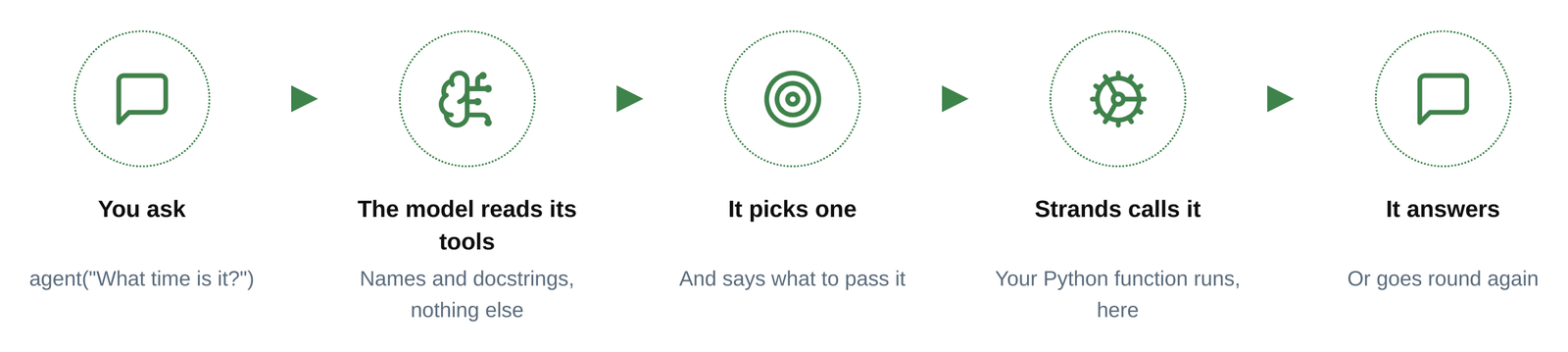
The agent loop, in five steps
The same loop runs in every framework. What changes is where the tools live: in the same Python process, behind an MCP server[6], or behind another agent via A2A.

Two ways in, same price
Option A builds a prototype against your data. Option B reviews an agent pilot you already have. Both start at €5,000 net.
Agent workshop
Workshop days with your engineers, plus the written results you choose.
€2,000 each, 3 to 4 hours, remote or on-site
Delivered within 5 business days after the last session.
Prototype build
Architecture review
Agentic AI workshop
Engineering pairing for production hardening is scoped after the workshop. AWS proof-of-concept funding often applies to Option A.
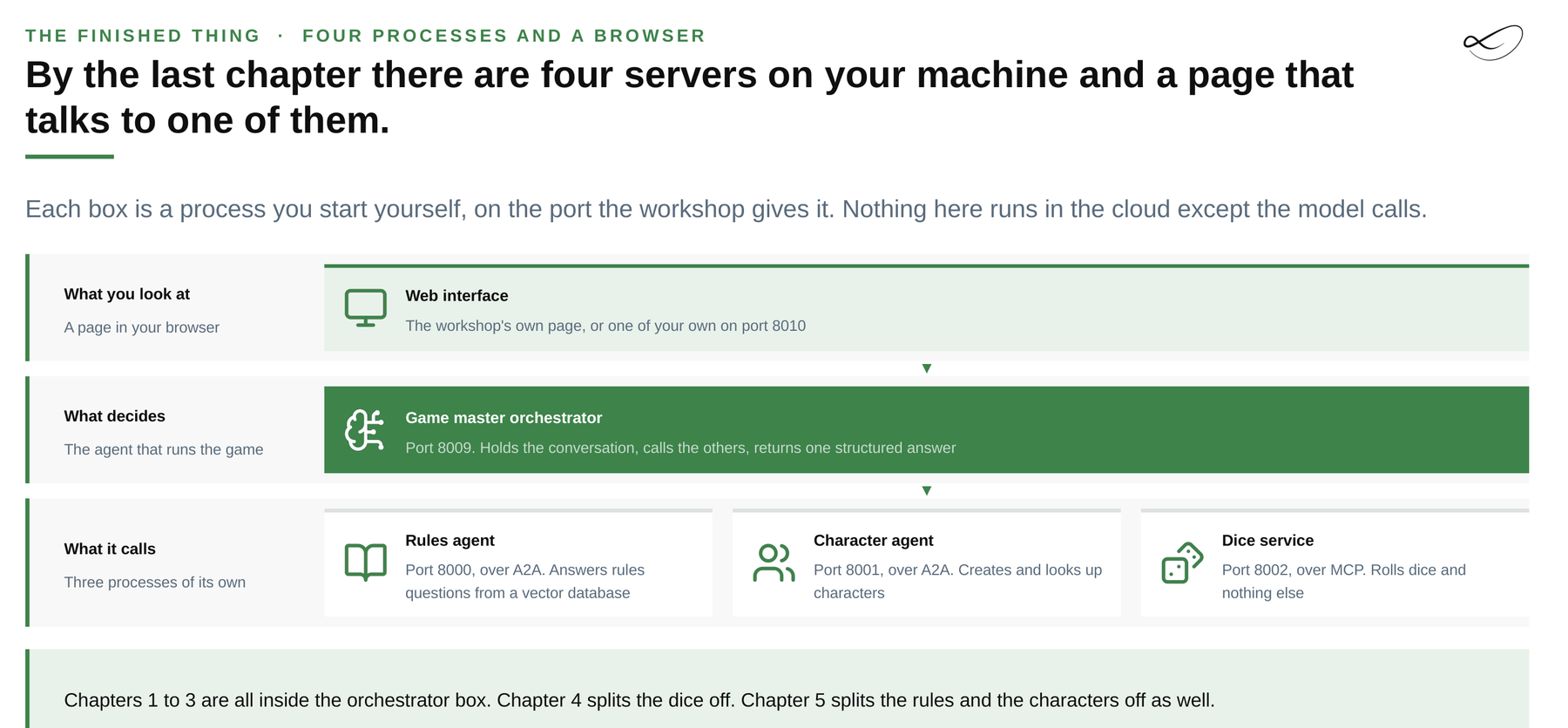
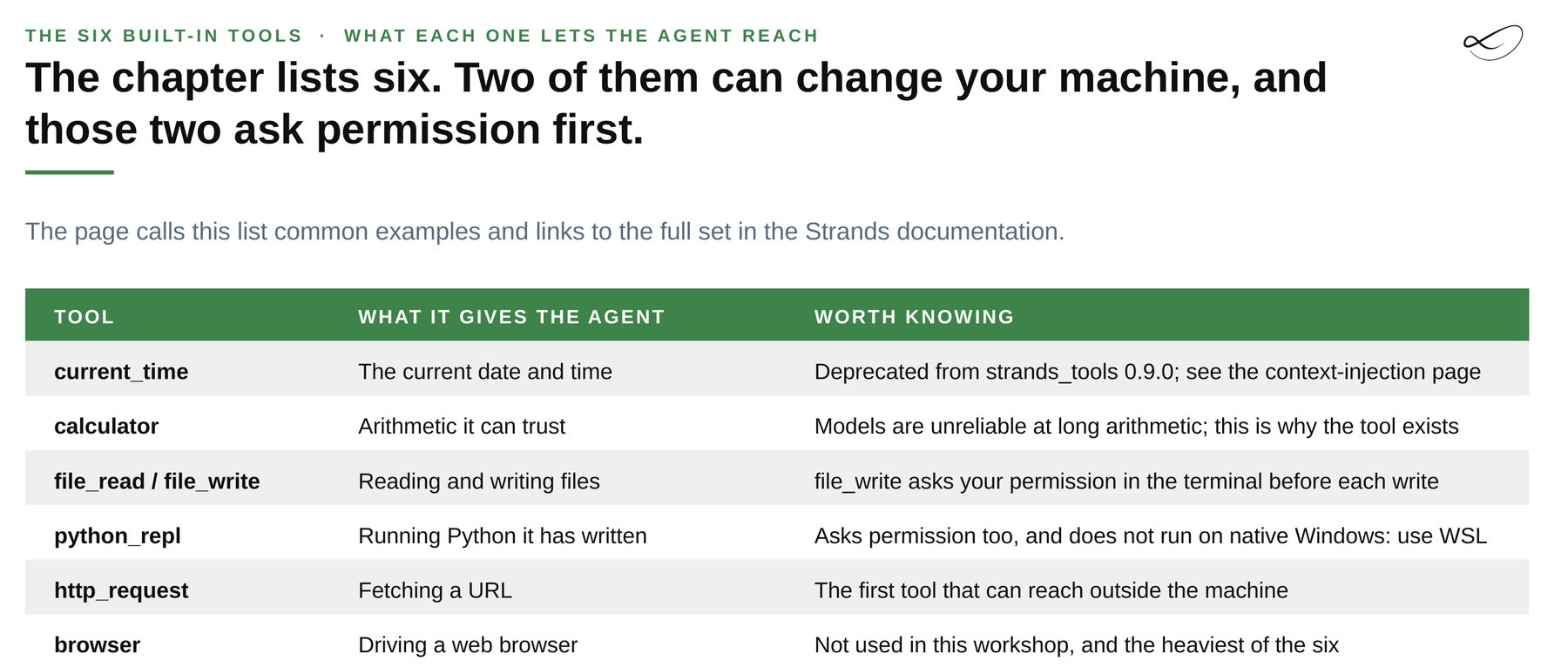
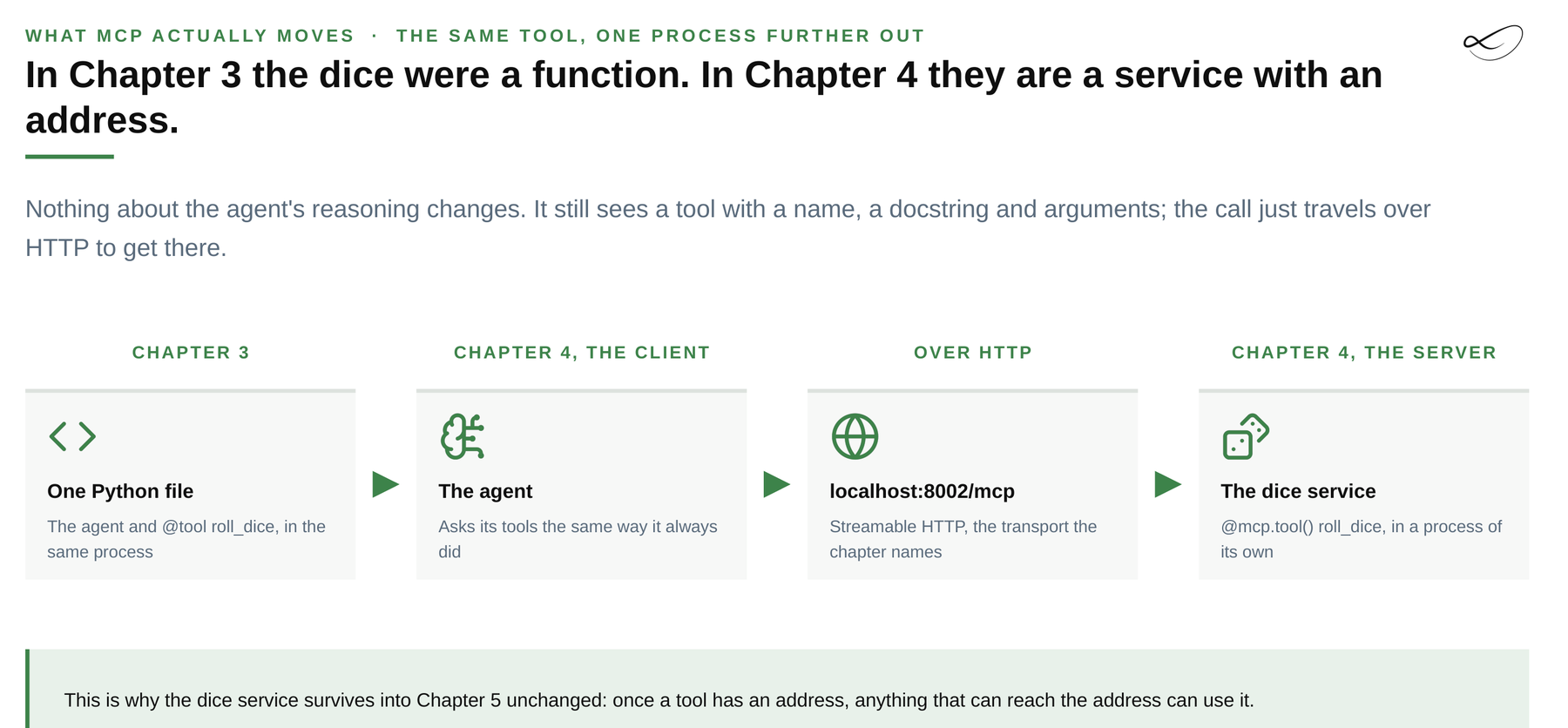
What an agent system looks like when it is running
Screens from the walkthrough of a working multi-agent build, rather than an architecture drawn in the abstract.
Real patterns, documented in the open.
Each link opens a write-up on ai-solutions.wiki, the open engineering reference I maintain. Architecture, services and trade-offs are explained there in full.
Building Enterprise AI Chatbots That Actually Help
Practical guidance for building customer-facing AI chatbots that deliver real value: architecture, knowledge base design, escalation patterns, and quality measurement.
Read on ai-solutions.wiki →Public sectorAI Caseworker Assistant - Intake, Risk Flags, and Next Actions
An AI assistant that helps social services caseworkers process intake forms, surface risk signals, and identify appropriate next actions: reducing manual review time while keeping humans in control of all decisions.
Read on ai-solutions.wiki →Real estateAI Tenant Support - Repairs, Scheduling, and Vendor Coordination
Automated repair request intake, vendor scheduling, and tenant communication for property management operations.
Read on ai-solutions.wiki →RetailAI for Marketplace Dispute Resolution
Automated buyer and seller dispute triage, evidence review, and fair resolution proposals for marketplace platforms.
Read on ai-solutions.wiki →InsuranceAI Claims Assistant - From Intake to Payout Recommendation
An AI assistant that guides claims from first notice of loss through evidence gathering, missing information detection, fraud screening, and payout recommendation: with human adjuster sign-off at every decision gate.
Read on ai-solutions.wiki →Case patternAI Chatbot for Customer Service at a Telecom Provider
Architecture and lessons from deploying a production AI chatbot handling 60% of customer service inquiries for a regional telecom company.
Read on ai-solutions.wiki →The AWS services behind this work.
Plain-language notes on the services I use for this kind of project. Each name links to the official AWS documentation.
Amazon Bedrock
Managed access to foundation models from several providers through one API. You choose the model and write the prompt; AWS runs the model.
Amazon Bedrock AgentCore
Runtime, memory, identity and tool gateway for AI agents built with any framework, such as Strands or CrewAI.
Amazon Bedrock Knowledge Bases
Retrieval-augmented generation: your documents are chunked, embedded and stored in a vector store, and the relevant parts go into the prompt.
Amazon Bedrock Guardrails
Filters for topics, harmful content and personal data on the way into and out of the model.
AWS Identity and Access Management (IAM)
Who and what may call which service. For agents: one narrow role per agent.
Amazon CloudWatch
Logs, metrics and alarms. For AI systems: latency, errors and cost per call.
AWS CloudTrail
Records every API call in the account, the audit trail for what an agent actually did.
AWS Lambda
Runs small pieces of code on demand without servers to manage. You pay per request and duration.
Check AWS funding before you pay.
Many AI proofs of concept and cloud migrations qualify for AWS funding: credits for the AWS usage and, in some partner programmes, funds for the delivery work. What applies depends on the project, the programme and the AWS account team. I check it in the Idea Call, and the workshop results are written so they can go straight into an application.
Proof of concept
For a prototype on AWS with a clear path to production.
Migration
For larger cloud moves, planned in phases.
What people ask before booking.
Which agent framework do you use?
The one that fits: Strands Agents for AWS-native Python agents, CrewAI for role-based crews, LangGraph for explicit state machines. All three can run on Amazon Bedrock AgentCore Runtime.
Can the agents use our own model?
Yes. Amazon Bedrock Custom Model Import runs supported open-weight models you tuned yourself, and self-hosted models on OpenShift AI or vLLM work for data that must stay on site.
How do you keep agents from doing damage?
One narrow IAM role per agent, tools that only expose what the job needs, approval steps for irreversible actions, guardrails on input and output, and CloudTrail logs of every call.
What does it cost to run?
It depends on model, traffic and tool calls. The cost and latency limits result gives you a per-request estimate and alarms. AgentCore bills per use, see the AWS pricing page in the sources.
We already have an agent pilot. Can you review it?
Yes, that is Option B: one workshop with your team plus a written permission map, evaluation plan and readiness scorecard.
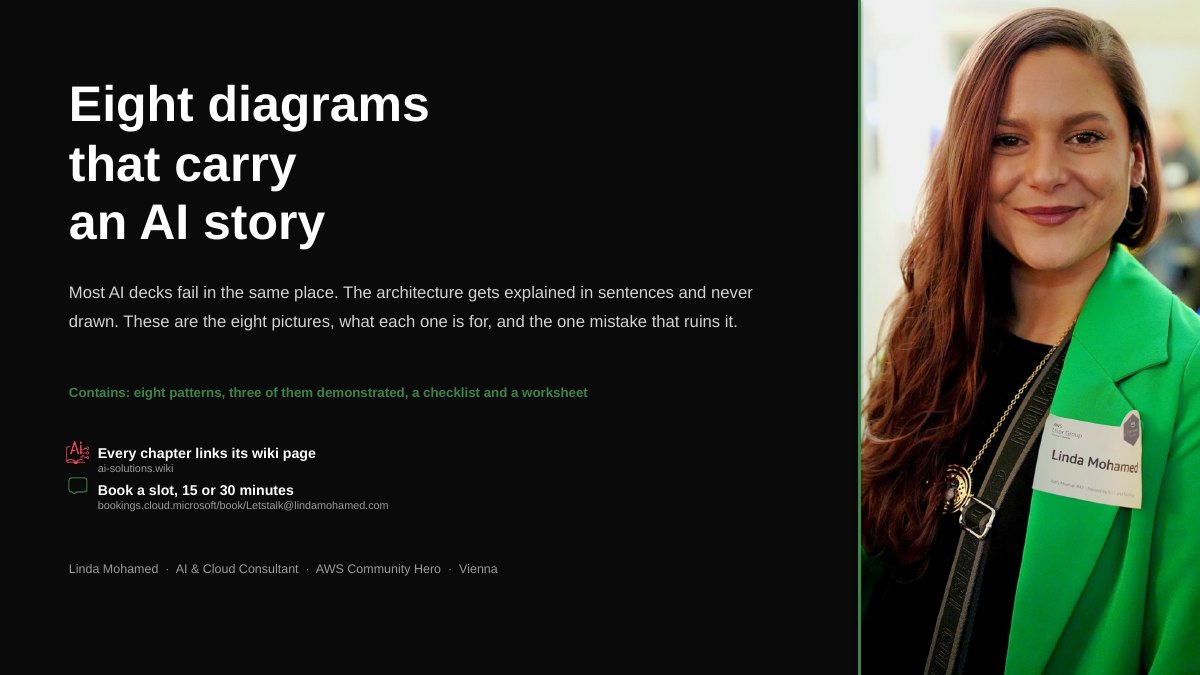
FREE DECK
Eight Diagrams
Eight architecture patterns drawn, three of them demonstrated, and the mistake behind most of them.
- Eight patterns, three of them demonstrated
- A checklist
- A worksheet
37 pages. Large type, one idea per page, sources on every page. Double opt-in: you confirm by email first. Unsubscribe with one click.

Linda Mohamed
I design and build AI and cloud systems on AWS and hybrid platforms, and I teach how they work. I have organised the AWS User Group Vienna for more than seven years, co-organise AWS Community Day DACH, teach AI architectures at Hochschule Burgenland, speak at conferences in Europe and the US, and maintain ai-solutions.wiki. Based in Vienna. Remote or on-site, in English or German.
Where the facts come from.
Prices, service names and limits change. The linked official pages are the reference; figures on this page were checked in September 2026.
- AWS: What is Amazon Bedrock AgentCore?
- AWS: Amazon Bedrock AgentCore pricing
- AWS: Custom Model Import in Amazon Bedrock
- AWS: Bedrock Agents (classic) maintenance mode
- Strands Agents SDK: sample workshop Once Upon Agentic AI (aws-samples)
- Model Context Protocol specification
- OWASP Top 10 for LLM Applications
- ai-solutions.wiki: OWASP Top 10 for LLMs explained
- InstructLab (open source model tuning)
Start with one conversation.
30 minutes to look at your idea, your data and the right starting point. Or book 15 minutes if you only have a question.
- Build, review or pairing
- Which agents, tools and data are in scope
- Where your model should run
- Whether AWS funding applies
Vienna, Austria · remote across Europe · [email protected]