
Enterprise AI Consultant vs. AI Consultant
Feb 11, 2026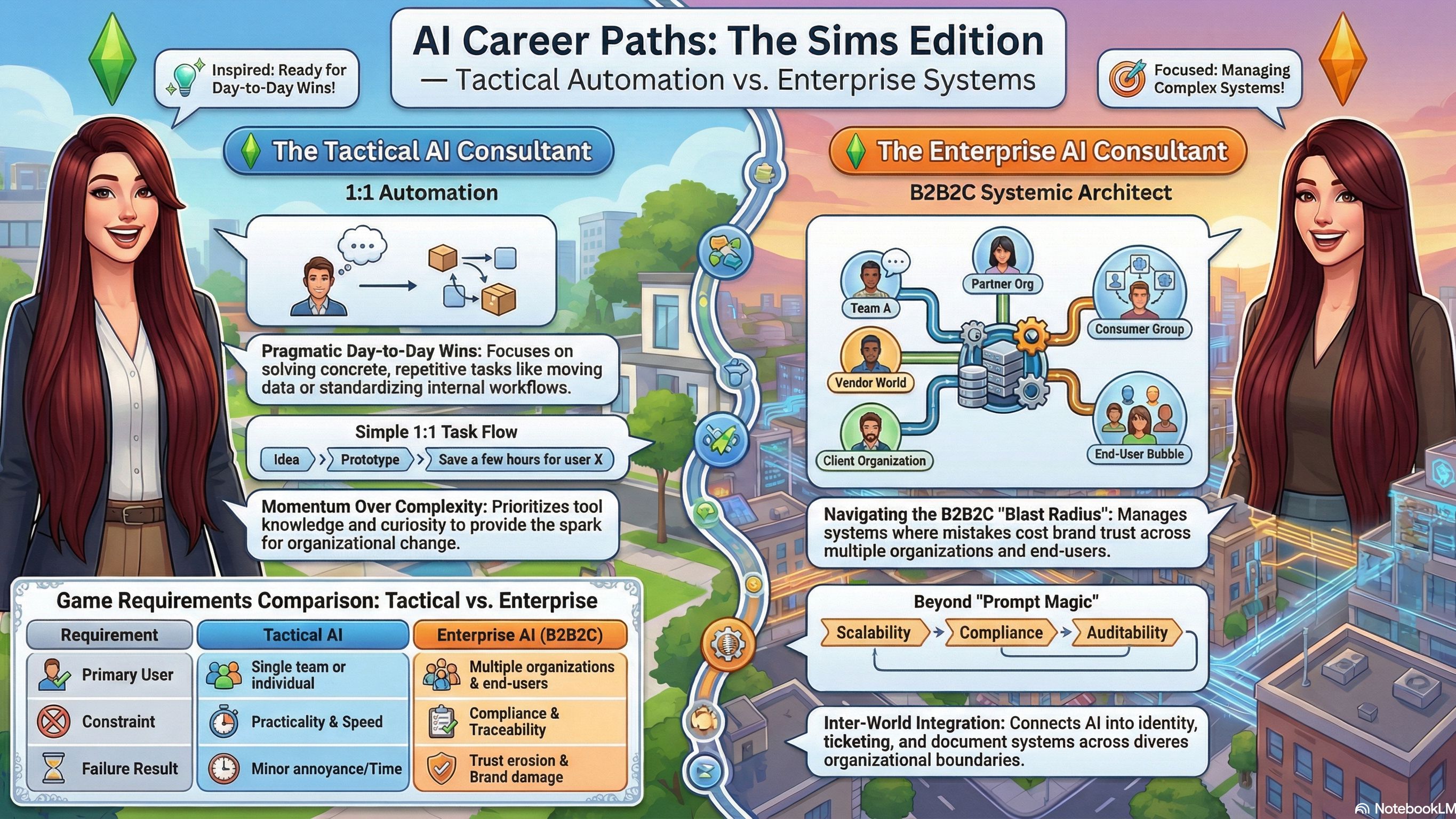
(and why it matters)
I recently came across a video of a young consultant explaining that you don’t need 10 years of experience to automate tasks for businesses. And honestly, I don’t think that’s wrong.
It just depends on what we mean by “automating tasks.”
When someone says that, it could mean: “I’ll build you a simple flow that saves two hours a week.” Or it could mean: “I build systems that reliably carry entire process chains across multiple organizations, with compliance, handoffs, and auditability built in.”
Both are automation. But they are very different jobs.
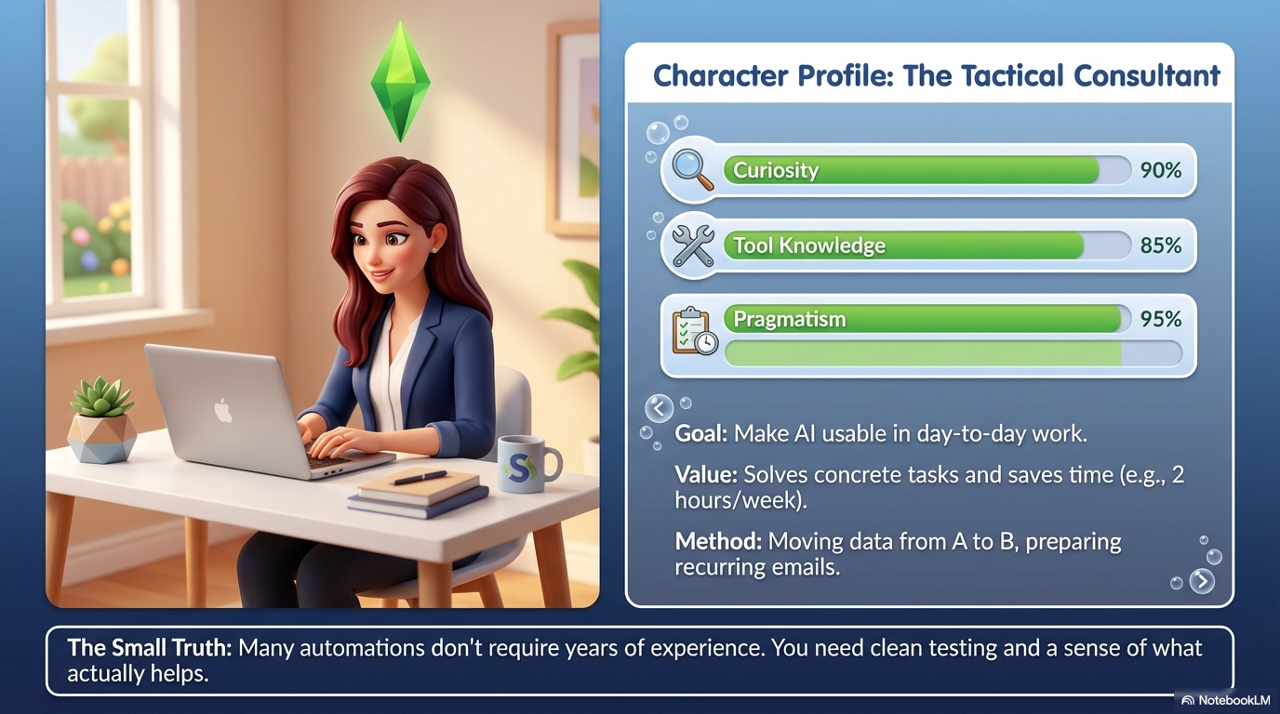
The small truth: many automations don’t require years of experience
When a team has repetitive tasks and manageable scope, smart automations can deliver real value quickly:
- Moving data from A to B
- Preparing recurring emails or documents
- Standardizing simple internal workflows
For this, you mainly need curiosity, solid tool knowledge, clean testing, and a sense of what actually helps in daily work. Much of this can be learned fast.
Deep respect to the people who do this well. They often bring the inspiration and momentum organizations need to get started.
Where it gets different: when AI touches B2B2C
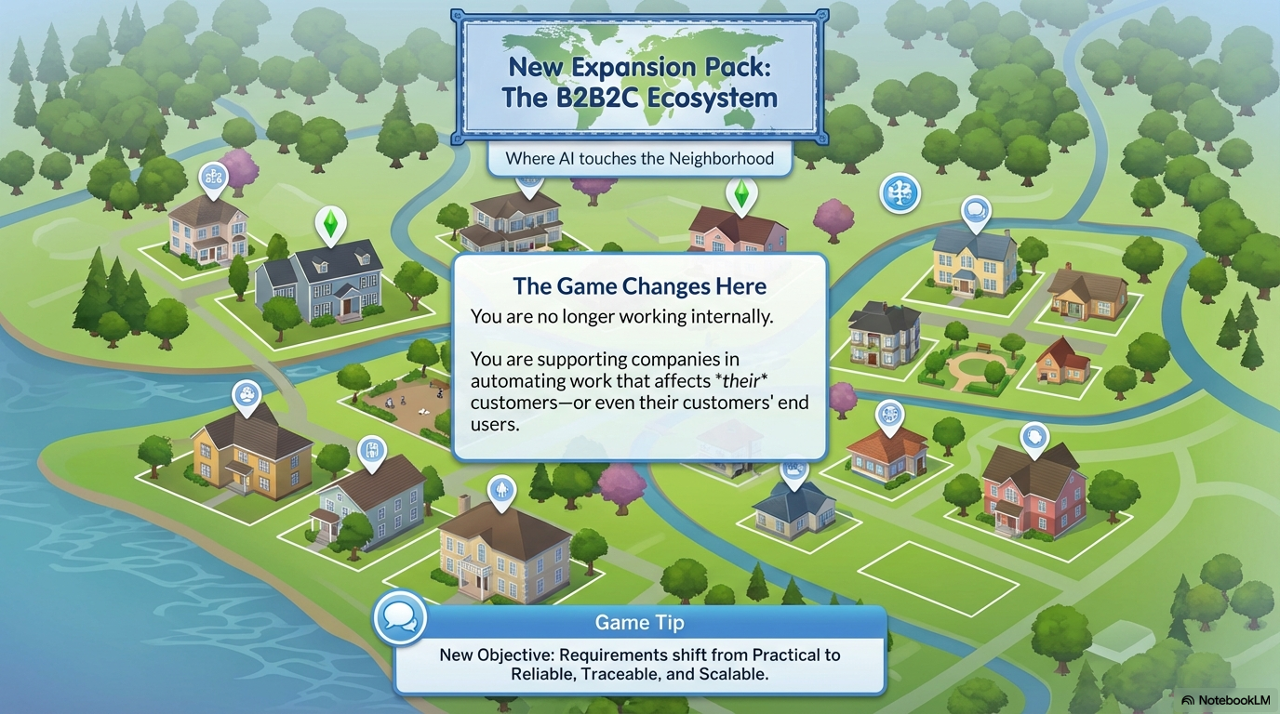
I often don’t just work for a team internally. I support companies in automating work that directly affects their own customers - or even their customers’ end users.
That’s the moment when “practical” is no longer enough. It has to be reliable, traceable, and scalable.
Because once you’re in B2B2C territory, the requirements shift:
- Mistakes don’t just cost time. They cost trust.
- A workaround is rarely “fine” because it escalates later.
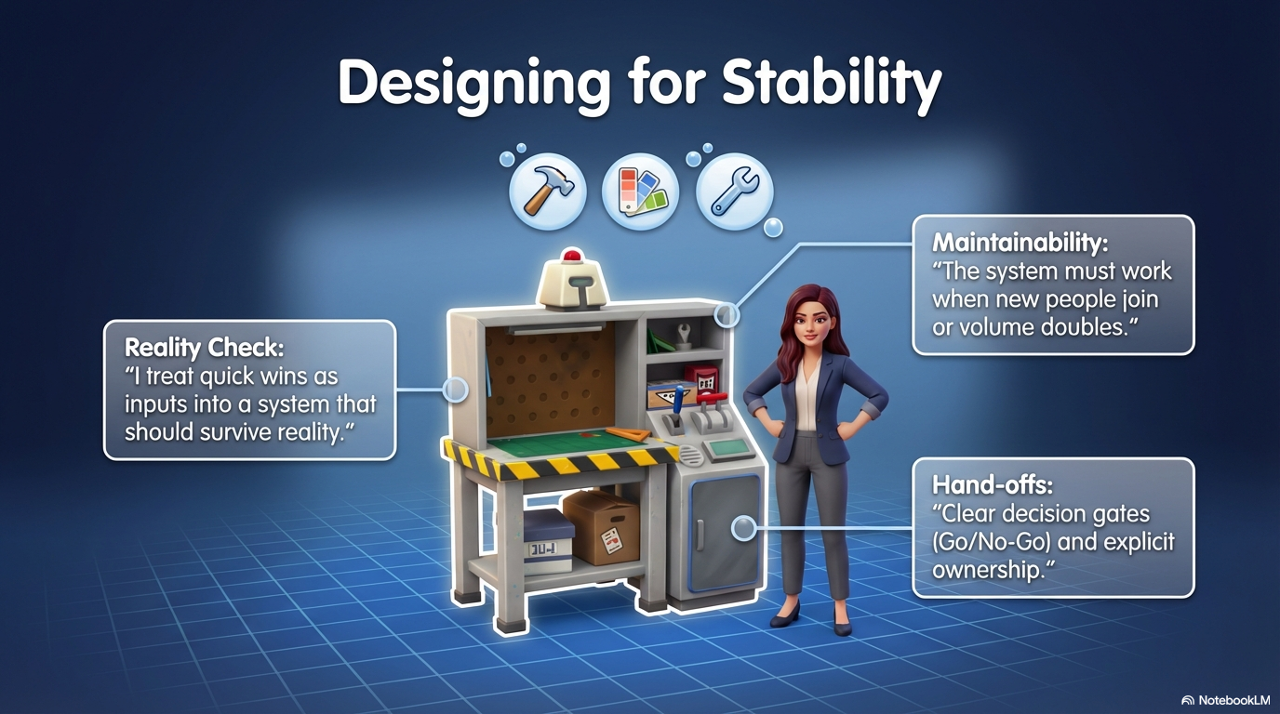
- The system must still work when new people join, a process is audited, or volume doubles.
Two roles. No hierarchy.
I see a distinction here that doesn’t need gatekeeping, but deserves to be named.
AI consultant (tactical, hands-on)
- Makes AI and automation usable in day-to-day work
- Solves concrete tasks
- Builds quick prototypes and pragmatic workflows
- Brings momentum and new ideas into organizations
Enterprise AI consultant (systemic, operationally grounded)
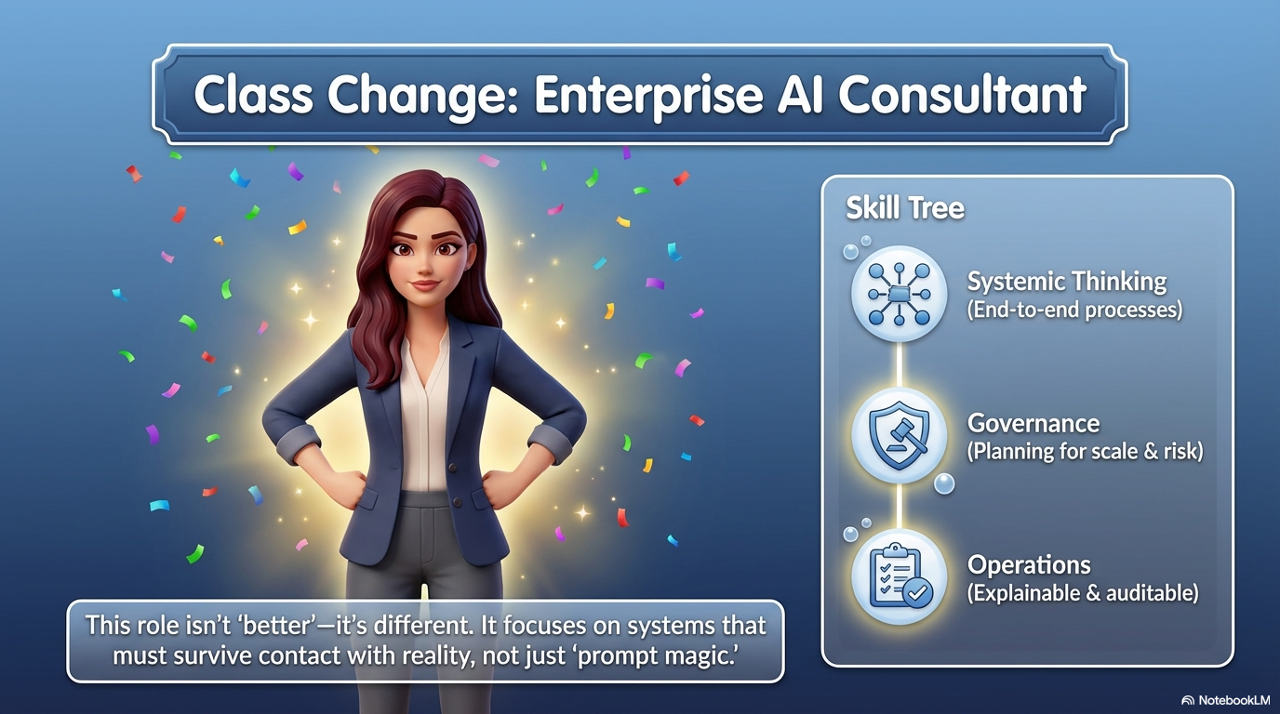
- Thinks in end-to-end processes, interfaces, and system boundaries
- Plans for scale, roles, governance, and risk
- Builds with compliance, data classification, operations, and handoffs in mind
- Delivers not just “it works” but “it’s explainable, maintainable, and auditable”
This is not better or worse. It is a different job.
And without the pragmatic AI consultants doing the smaller work, many companies would never get started.
What “enterprise” actually changes
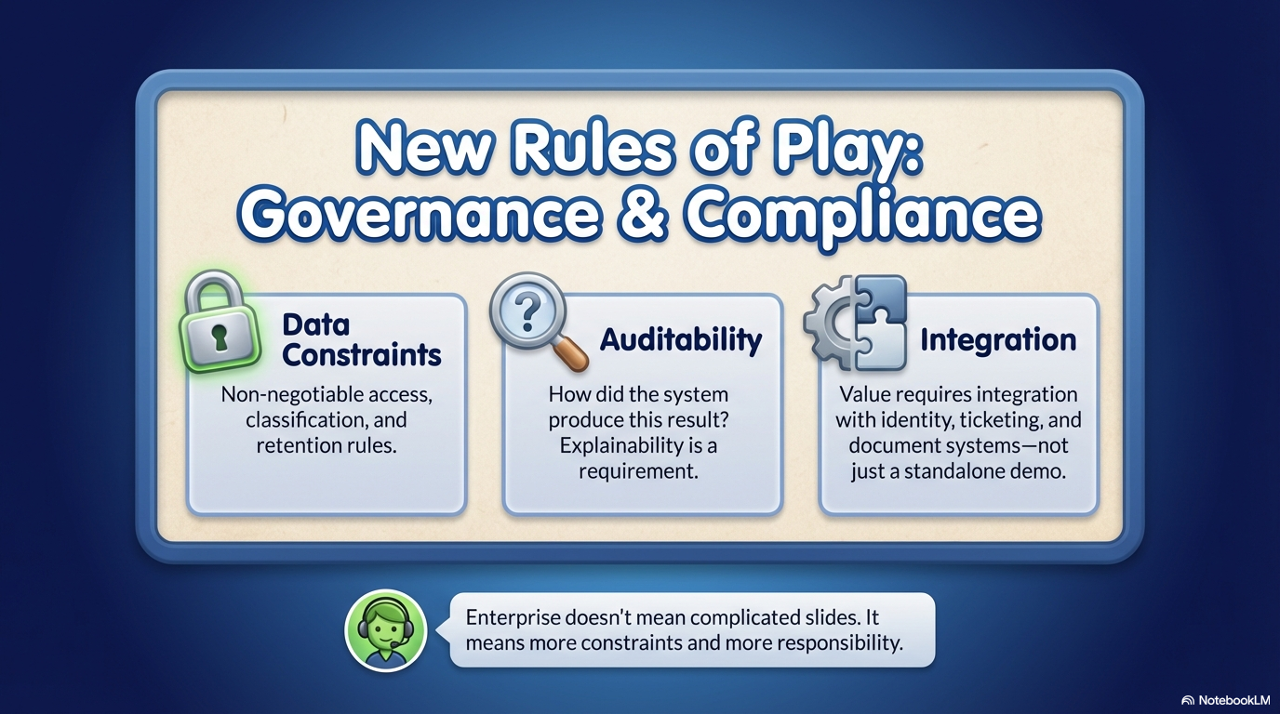
Enterprise doesn’t mean bigger ego or more complicated slides. It means more constraints and more responsibility.
Here are the shifts I see when AI moves from helpful experiment to business capability:
The blast radius grows. A small automation breaking is annoying. A customer-facing or revenue-impacting AI workflow breaking is a trust and brand problem.
Data constraints become non-negotiable. Access, classification, retention, and export rules apply. You need clarity on what data can be used, where, and by whom.
Compliance and auditability become requirements, not preferences. Someone will ask: “How did the system produce this result?” You need explainability, logs, and clear handoffs.
Ownership matters more than cleverness. Who operates it? Who approves changes? Who gets paged when it fails?
Integration beats demos. A prototype can be a single flow. Enterprise value usually requires integration with identity, ticketing, document systems, and existing workflows.
A practical test: when do you need enterprise framing?
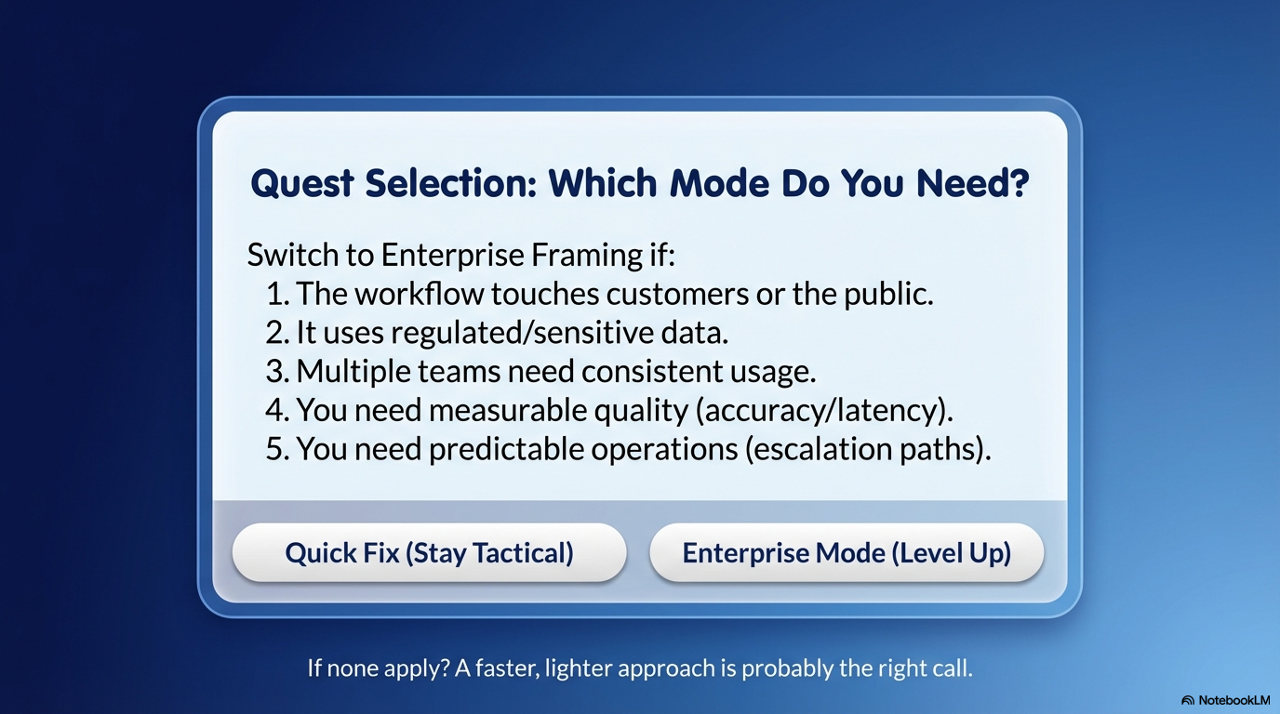
You likely need it when one or more of these is true:
- The workflow touches customers or the public (or the customers of your customers)
- The workflow touches regulated or sensitive data
- Multiple teams need to use the solution consistently
- You need measurable quality (accuracy, latency, cost) and a way to monitor it
- You need predictable operations: escalation paths, incident handling, ownership
If none of those apply, a faster and lighter approach is probably the right call.
Why I use the term
I call myself an Enterprise AI Consultant because it signals what I’m taking responsibility for:
- Turning AI initiatives into operational systems
- Making decisions explicit: go / no-go criteria and decision gates
- Designing for scale, compliance, and handover
- Ensuring the system is maintainable - not dependent on one person’s prompt magic
I still love quick wins. I just treat them as inputs into a system that should survive contact with reality.
AI consultants who do smaller, tactical work are often the reason organizations start learning in the first place.
The enterprise role is not “better.” It is simply the work that starts once the organization says: We want to rely on this.
That is the moment where responsibility becomes part of the solution.
If you’re working through what this means for your own setup, feel free to reach out: LinkedIn.